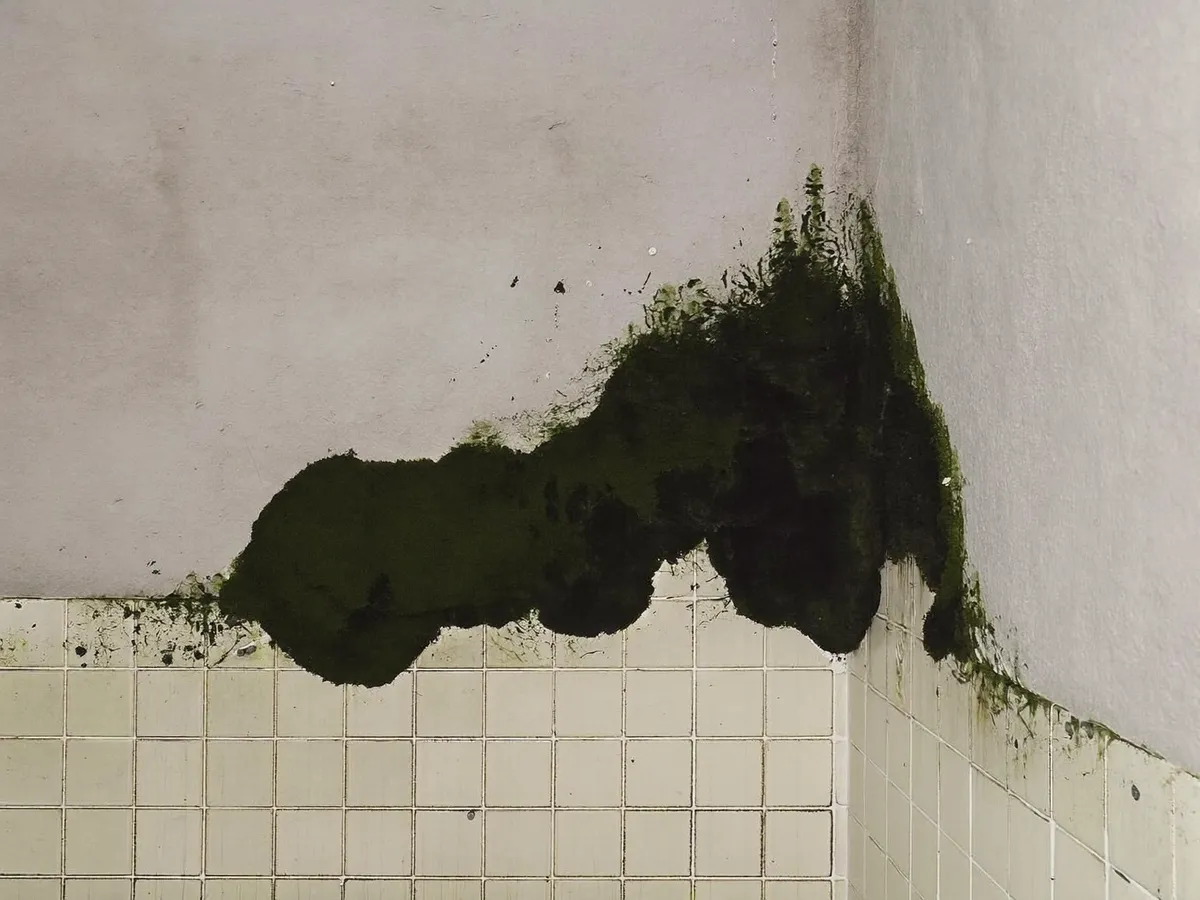
Why Bathrooms Are Bali's Biggest Mold Hotspot
Bathrooms combine the three conditions mold needs to thrive: moisture, warmth, and organic material. In Bali's tropical climate, where ambient humidity rarely drops below 75%, a bathroom without adequate ventilation becomes a mold incubator. The problem is compounded by Bali's open-air architecture, which many villas and guesthouses use — outdoor air brings constant humidity indoors.
The most common bathroom mold areas we treat are ceiling corners and centre panels (condensation collects there first), grout lines between tiles (porous and constantly damp), silicone seals around baths and shower trays (silicone is a favourite mold substrate), the undersides of shelves and cabinet bases, and the backs of walls adjacent to wet areas.
Standard household bleach and bathroom sprays kill surface mold temporarily but do not reach mold that has penetrated grout or silicone — within weeks, the mold returns, often worse. Our specialist treatment reaches and eliminates mold at the root.
Our Bathroom Mold Treatment Process
Surface assessment and mold identification
We begin with a full bathroom assessment — checking all surfaces including behind fixtures, inside cabinets, and the extractor fan housing. We identify the mold species and the primary moisture source (poor ventilation, leak, condensation, or seepage from adjacent areas).
Professional-grade mold removal
Using antimicrobial solutions far more concentrated than any retail product, we treat all affected surfaces. For grout, we use specialised penetrating agents that reach mold roots. Heavily contaminated silicone is removed and replaced with anti-mold silicone. Ceiling panels with deep mold penetration are treated or replaced depending on severity.
Anti-mold protective coating
After removal, all treated surfaces receive an anti-mold protective coating — a professional-grade product used in humid commercial environments. This creates an invisible barrier that prevents regrowth for 12+ months in normal conditions.
Ventilation advice included
Every bathroom treatment includes practical advice on ventilation improvements, extractor fan sizing, and daily habits that will reduce mold risk long-term. Prevention is always cheaper than repeated treatment.
What We Treat in Bathrooms
- Ceiling mold — black spots, grey patches, and discolouration
- Tile grout — brown, black or pink mold in grout lines
- Silicone seals around baths, showers, and basins
- Wall tiles — surface and sub-surface mold
- Cabinet undersides and shelf backs
- Extractor fan housing and ducting
- Exposed wall plaster behind fixtures
Pricing and Booking
Bathroom mold treatment starts from 500,000 IDR for a standard bathroom. Large bathrooms or those with extensive ceiling contamination are quoted individually. The service typically takes 2–4 hours and the bathroom can be used again the same evening once coatings have dried.
Many clients combine bathroom treatment with a full property inspection or whole-property prevention coating for maximum protection. For villa and hotel owners, our villa mold control program covers all bathrooms under a single ongoing contract.
FAQ
How often should I treat bathroom mold in Bali?
In Bali's tropical climate, we recommend professional bathroom treatment every 12 months with our anti-mold coating. Properties with poor ventilation or persistent leaks may need treatment every 6 months.
Can you remove mold from grout permanently?
Yes. We use penetrating antimicrobial agents that reach mold roots in porous grout. Surface bleach cleaning only removes visible mold temporarily — our treatment eliminates it at the source and applies protective coating to prevent return for 12+ months.
Do you replace silicone during bathroom treatment?
Yes, if silicone seals around baths, showers, or basins are heavily contaminated, we remove and replace them with anti-mold silicone as part of the treatment. This is included or quoted separately depending on the extent.